Digital Products for Travel Creators: 10 Ideas to Sell Online

For many travel creators, the first step to earning an income is through brand collaborations, affiliate marketing or advertising revenue. While these can be valuable sources of income, they often depend on a constant flow of new content, ever-changing algorithms and audience reach.
Digital products offer a different approach.
Rather than creating something new every day, you create a resource once and continue to improve and sell it over time. Whether it's a travel itinerary, city guide, restaurant collection or interactive travel guide, a digital product enables you to share your knowledge and continue to generate income long after its initial publication.
This doesn't mean replacing your existing income streams. Rather, it means adding an asset that you own and control — one that isn't tied to social media algorithms or brand campaigns.
In this article, you will discover ten digital products that travel creators can sell, learn which ones are the easiest to create and understand how to choose the right product for your audience.
Why Digital Products Are Becoming More Popular
Travel creators now have more opportunities to earn money than ever before.
Brand partnerships, affiliate marketing, sponsored content, consultancy work and group tours can all form part of a successful business model. However, most of these models require a continued investment of your time and attention. In order to continue earning, you usually need to keep publishing, promoting or working directly with clients.

Digital products work differently. Once created, they can be sold repeatedly without having to start from scratch each time. They also give you complete control over pricing, updates, and the customer experience.
For many creators, this makes digital products an attractive way to diversify income while developing something that grows alongside their audience.
If you would like to explore the various methods that travel creators use to generate income before deciding which product to develop, read our guide on How Travel Creators Can Monetize Their Knowledge.
10 Digital Products Travel Creators Can Sell
There isn't a single "best" digital product for all travel creators.
The right choice depends on your audience, your area of expertise and the type of content you create. Some products can be prepared in a matter of hours, while others require more time but can deliver greater long-term value.
Below are ten popular digital products that travel creators successfully sell online.
1. Travel Itineraries
A travel itinerary is one of the simplest digital products to create.
Rather than offering general advice, you provide travellers with a comprehensive plan of their trip, including where to go, when to go and how to organise their time.
Travel itineraries are particularly useful for:
- weekend city breaks;
- first-time visitors;
- road trips;
- family holidays;
- themed trips, such as food or wine tours.
They're relatively quick to create and can be an ideal first product for content creators who specialise in particular destinations.
2. City Guides
City guides are different from itineraries because they concentrate more on helping travellers understand a destination than on timing.
They often include:
- neighbourhood recommendations;
- restaurants and cafés;
- attractions;
- hidden gems;
- local customs;
- practical advice.
With occasional updates, a well-crafted city guide can remain relevant for years, making it one of the most popular digital products among travel creators.
3. Food & Restaurant Guides
Recommendations for places to eat are among the most frequently requested types of travel content.
Rather than answering the same questions repeatedly, content creators can compile a dedicated guide featuring their favourite restaurants, cafés, markets, bakeries and bars.
The more niche the guide, the more valuable it becomes.
Examples include:
- Best brunch spots in Barcelona
- Vegan restaurants in Lisbon
- Hidden tapas bars in Madrid
- Family-friendly cafés in Rome
As these guides address a specific issue, they are usually easier to market than general destination guides.
4. Google Maps Collections
Many travel creators already use Google Maps to save their favourite places. With a little extra organisation, these collections could be turned into useful digital products.
A curated map can include:
- restaurants and cafés;
- viewpoints;
- photo locations;
- local shops;
- hidden attractions;
- suggested walking routes.
Although a map alone may not be considered a premium product, it can be an effective addition to a larger travel guide or itinerary.
5. Packing Lists and Travel Checklists
Packing lists are simple to create but solve a real problem for travellers.
Instead of generic checklists, focus on a specific audience or destination.
For example:
- Packing List for Iceland in Winter
- Carry-on Packing List for Europe
- Family Beach Holiday Checklist
- Hiking Essentials for the Dolomites
As a standalone product, a map may not be enough to make it a premium offering, but it can be a useful addition to a travel guide or itinerary.
6. Travel Photography Guides
If photography forms part of your content, why not package your expertise up into a guide?
Rather than just showing beautiful images, explain how other travellers can recreate them.
A photography guide might include:
- exact shooting locations;
- the best time of day to visit;
- camera or phone settings;
- seasonal advice;
- route suggestions.

The fact that this type of product appeals to a very specific audience makes it easier to market as a premium resource.
7. Road Trip Guides
Road trip guides are ideal for creators whose content focuses on destinations that are best explored by car.
Rather than merely suggesting places to visit, you can plan a full itinerary including driving times, scenic stops, restaurants, viewpoints, accommodation recommendations and practical advice for every stage of the journey.
Popular examples include:
- The Amalfi Coast Road Trip
- Iceland Ring Road Guide
- North Coast 500 in Scotland
- California Highway 1 Itinerary
Road trip guides save travellers hours of planning time, and they can often be marketed as premium products because they combine logistics with local knowledge.
8. Weekend City Guides
Many travellers don't have a whole week to explore a destination.
They only have two or three days.
Weekend guides help them make the most of their time away by combining essential attractions with carefully selected local recommendations.
A typical weekend guide might include:
- a day-by-day itinerary;
- restaurant recommendations;
- neighbourhood suggestions;
- walking routes;
- practical transport tips.
Weekend guides are often a great first digital product for creators who specialise in a particular city because they're focused and easy to use.
9. Travel Planning Templates & Kits
Not all digital products need to be destination-specific.
Travel planning templates allow people to organise their own trips while benefiting from your expertise.
These products can include:
- planning spreadsheets;
- budget trackers;
- packing templates;
- itinerary planners;
- travel checklists.
Templates can be created relatively quickly and can be used as standalone resources or to complement destination guides.
Although each of these products solves a specific problem, many travel creators eventually combine several of them to create a more complete, all-in-one experience. Rather than selling an itinerary, a map and restaurant recommendations separately, they combine all these elements into one digital product that's easier for travellers to use.
10. Interactive Travel Guides
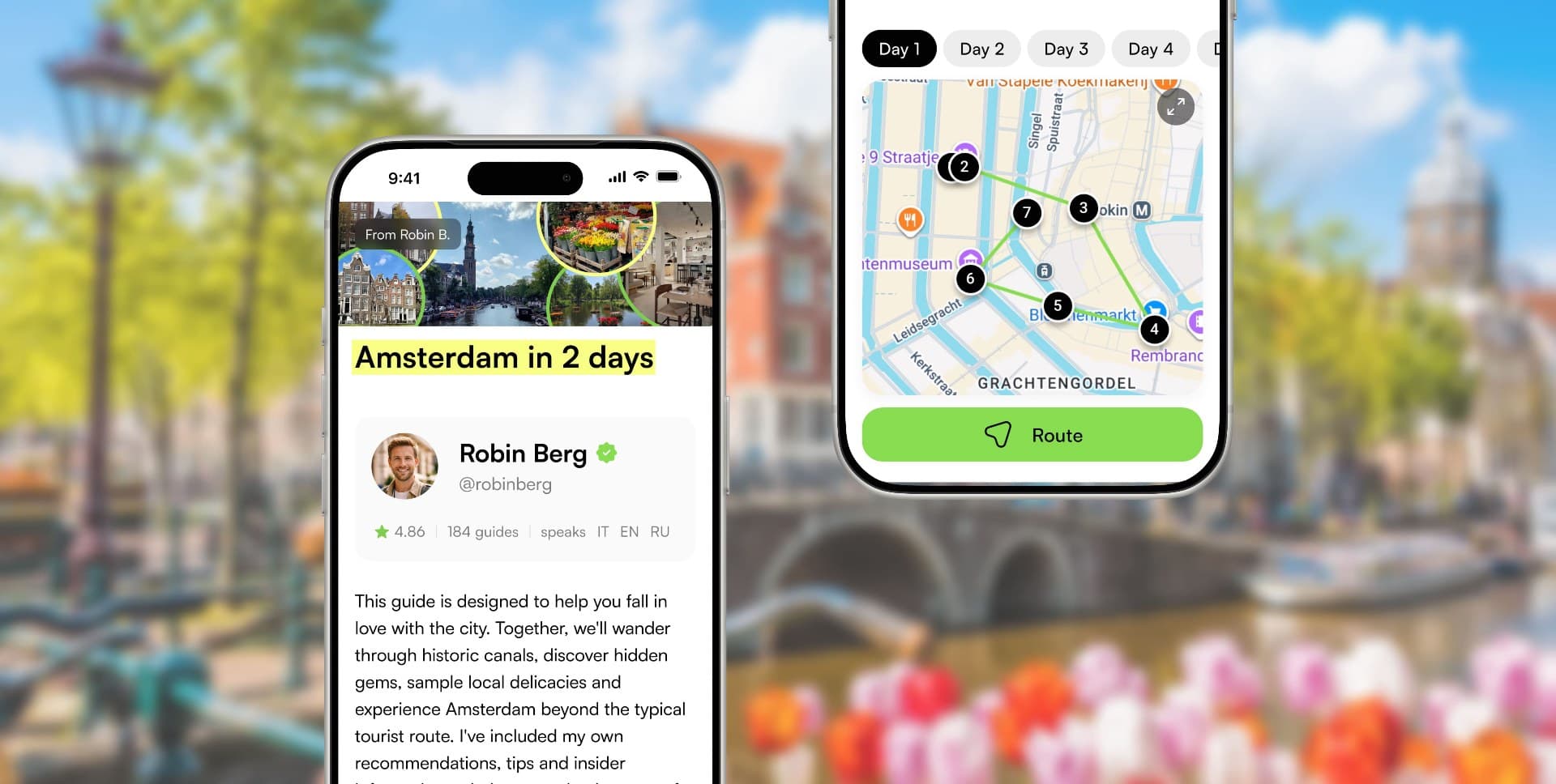
Interactive travel guides combine many of the digital products we've already covered into a single, seamless experience.
Instead of having to switch between PDFs, Google Maps, notes, booking confirmations and saved social media posts, travellers can access everything they need in one place.
An interactive travel guide can include:
- day-by-day itineraries;
- interactive maps;
- restaurant and café recommendations;
- practical travel information;
- photos and videos;
- local tips;
- booking links and useful resources.
As all this content is connected, travellers spend less time searching for information and more time enjoying their trip.
Interactive guides also have practical advantages for creators. They are easier to update than static PDFs and simpler to expand over time. They can also grow alongside your audience as you add new recommendations and destinations.
If you're unfamiliar with this format, our article 'What is a digital travel guide?' explains how interactive guides work and why they're becoming increasingly popular.
If you're looking to compare different formats, our article 'PDF Travel Guides vs Interactive Travel Guides' delves deeper into the strengths and limitations of each approach.
Which Digital Product Is Right for You?
Now that you have considered the various options, a logical question arises:
Where should you start?
There is no one-size-fits-all answer, but there are a few principles that can help you select a product that is simpler to build and easier to develop.
Start With Knowledge You Already Have
Many travel creators think they need to develop a new product first.
More often than not, however, the best product already exists in the form of your notes, itineraries, saved places, recommendations, messages to your followers and content you have posted in the past.
Rather than creating something from scratch, start by organising what you already have.
Solve One Problem Really Well
Avoid trying to create a one-size-fits-all product.
Travellers are more likely to buy a product that solves a specific problem.
For example:
- A 48-hour guide to Lisbon
- The best cafés in Paris for remote working
- A family-friendly itinerary for Barcelona
The more specific the product's purpose, the easier it is for people to understand its value.
Think About Long-Term Value
Not all digital products are equally easy to maintain.
Some require a complete overhaul with every update, while others can be developed gradually by adding new recommendations, routes, or useful information.
If you plan to develop your product in the long term, it’s worth choosing an update-friendly format that remains user-friendly for travellers as your content grows.
Build for the Experience, Not Just the Information
People rarely pay for information alone.
They pay for clarity, convenience and reassurance.
A great digital product does more than just tell travellers where to go. It helps them to enjoy their destination with less planning and decision-making.
This is one reason why interactive travel guides have become so popular. Rather than keeping maps, recommendations, itineraries and practical tips in separate documents, they bring everything together into one easy-to-use experience before and during a trip.
To see how this works in practice, explore one of our interactive sample guides or start building your own with the Octripus AI Copilot.
FAQ
What digital products can travel creators sell?
There are many options to choose from, including travel itineraries, city and restaurant guides, Google Maps collections, packing checklists, photography and road trip guides, travel planning templates, and interactive travel guides. Which option is best for you will depend on your area of expertise, your target audience, and the type of travel experience you want to offer.
Which digital product is easiest to create?
Travel itineraries, city guides and restaurant recommendations are often a good place to start, as many creators already have the necessary knowledge. Instead of creating something entirely new, you can organise the recommendations you've already shared with your audience.
Do I need a large audience to sell digital products?
No — a small but engaged audience is often enough to validate your first product. It's usually more effective to solve a specific problem for a niche group of travellers than to try to create something for everyone.
What's the difference between a PDF and an interactive travel guide?
A PDF is a static document which usually needs to be downloaded and replaced whenever updates are made. By contrast, an interactive travel guide brings maps, itineraries, recommendations and practical information together in one place, making it easier for travellers to use and simpler for creators to maintain.
Which digital product generates the most passive income?
There isn't a single product that's best for everyone. Those that solve a specific problem, remain useful over time, and can be easily updated generally have the greatest long-term potential. One example is interactive travel guides, which combine several types of travel content into a single evolving product.
Where can I sell digital products?
Many creators sell their work through their own websites or online marketplaces such as Gumroad, Etsy and Payhip. Others sell them directly to their audience via newsletters and social media. Which option is best for you will depend on your business model and the experience you want to offer your customers.
Conclusion
Digital products allow travel creators to turn their knowledge into valuable content that continues to be valuable long after a trip has ended or a post has been published.
The most important thing is to just get started, whether that's with a travel itinerary, a city guide, a restaurant collection, or an interactive travel guide. There's no need to create every type of digital product at once. Start with one idea, learn from your audience, and refine it over time.
To see what an interactive travel guide looks like or to start building one yourself, explore our sample guide or chat with the Octripus AI Copilot.