Create Once, Share Forever: The Power of Digital Travel Guides

Every travel creator has been there.
A traveller sends you a message asking for recommendations on where to eat, what to see, and how to spend a weekend in your city. You open WhatsApp, scroll through old conversations, copy down a few restaurant names, paste a Google Maps link, and add a couple of personal recommendations before hitting 'Send'.
A few days later, someone else asks almost exactly the same questions.
So you do it all over again.
At first, it doesn't seem like a problem. Helping people is part of what you do, and every recommendation feels personal. But over time, those individual messages begin to add up. You find yourself rewriting the same advice, copying the same links, and creating the same itineraries for different travellers.
The issue isn't that your recommendations lack value. It's that they're scattered across chats, emails, notes and documents, making them difficult to reuse, update or share consistently.
A digital travel guide changes that. Rather than creating the same recommendations repeatedly, you organise your knowledge once and make it available whenever needed.
Why Travel Recommendations Keep Disappearing
Each recommendation solves a problem for a traveller.
Then it disappears.
For example, a list of restaurants shared on WhatsApp can get buried under new messages. An itinerary shared via email can get lost in someone's inbox. A PDF saved on your computer quickly becomes outdated as new places open and others close.
Over time, your best travel advice becomes scattered across different platforms and conversations. Even though you've already done the work, finding and reusing it can be almost as time-consuming as creating it from scratch.
For travel creators, tour guides and local experts, this creates a cycle of repetitive work. The more people you help, the more often you're asked the same questions and the more time you spend repeating answers you've already given.
Instead of building on your existing knowledge, you're constantly recreating it.
The Hidden Cost of Repeating Yourself
Many travel creators are unaware of how much time they spend doing repetitive work.
For example, recommending a restaurant takes only a minute. Sending an itinerary might take five minutes. Looking up a saved Google Maps list or copying links from an old email doesn't feel like a significant task in itself.
The problem is that these small tasks happen repeatedly.
As your audience grows, so does the number of messages asking about accommodation, dining options, transport, and attractions not to miss. Before long, you're spending hours every month answering questions that you've already answered dozens of times.
There's another hidden cost: consistency.
When recommendations are shared across different chats, emails or documents, it's easy for information to become outdated or inconsistent. For example, one traveller might receive your latest restaurant recommendations, while another gets a list you created months ago. Updating every version quickly becomes impossible.
Instead of making your knowledge more accessible, you're constantly managing multiple versions of the same information.
Create Once, Share Forever
Imagine only having to answer those questions once.
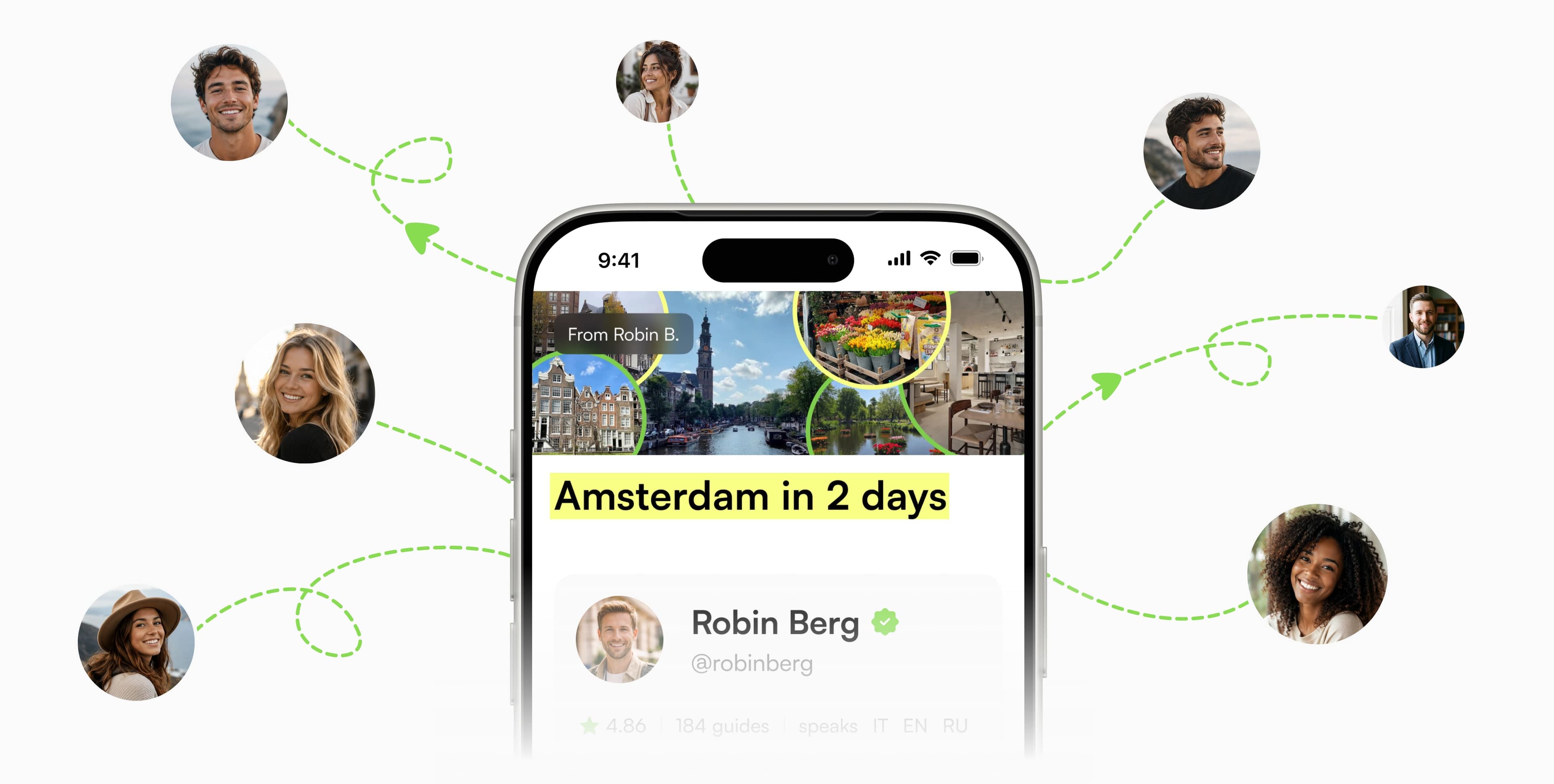
Instead of writing a new message each time someone asks for recommendations, you can create a single digital guide that brings everything together in one place. Whenever someone asks for recommendations on where to eat, what to see, or how to spend a weekend in your city, simply share the guide with them.
The guide doesn't replace personal conversations. It just replaces the repetitive parts of those conversations.
Since your recommendations are stored in one place, they're much easier to update. Add a new café, remove a closed restaurant or include a seasonal tip once, and every future traveller will automatically receive the latest version.
Over time, your guide will become more valuable and easier to manage. Every update improves the experience for future travellers without requiring you to start again from scratch.
That's the real power of digital travel guides. They don't just organise information — they transform your knowledge into a resource that continues to be useful long after you've created it.
How Digital Travel Guides Turn Knowledge into an Asset
Most travel creators believe that their recommendations are what makes them valuable.
In reality, it is their expertise that is truly valuable.
Years of discovering local cafés, testing itineraries, answering travellers' questions, and refining recommendations result in expertise, which is much more valuable than a mere collection of tips.
However, this expertise is often scattered across messages, emails, notes and documents.
A digital travel guide brings all that knowledge together in one place, making it easier to improve, update and share over time.
Rather than recreating your experience for every traveller, you can build on it. Every new recommendation strengthens the guide, every update improves the experience and every traveller benefits from everything you have already learned.
This is when your knowledge stops being a series of conversations and starts becoming a lasting asset.
If you're new to digital guides, our article What is a digital travel guide? explains how they work and why they're becoming a popular alternative to traditional PDFs and scattered travel documents.
Who Benefits Most from Digital Travel Guides
The concept of creating content once and sharing it repeatedly isn't exclusive to a single category of travel professional. Anyone who regularly provides recommendations can benefit from organising their knowledge in the form of a digital guide.
For example, tour guides often receive the same questions after every tour. Rather than sending individual lists of restaurants, museums or transport options to each group, they can share one comprehensive guide that enhances the experience and remains useful long after the tour ends.
Travel creators already publish valuable content on blogs, Instagram, TikTok and YouTube. A digital guide brings all this content together in a format that's easier for followers to use, save and revisit when planning a trip.
Local experts spend years discovering hidden cafés, neighbourhood walks and places that rarely appear in traditional guidebooks. Digital guides allow them to organise these discoveries and share them without having to repeat the same conversations.
Travel consultants and planners can use digital guides to provide every client with the same high-quality recommendations, while still being able to personalise the itinerary when needed. Rather than starting from scratch each time, they build on a resource that improves with every update.
Although their roles are different, they all solve the same problem: transforming disparate recommendations into a single organised resource that's straightforward to maintain and share.
Your Guide Gets Better Over Time
One of the biggest advantages of a digital guide is that it evolves as your experience does.
Every new trip, recommendation or traveller question provides an opportunity to enhance your existing content. There's no need to create a new guide every season — you can simply update the existing one.
Perhaps you have discovered a better viewpoint, found a restaurant that has become your new favourite, or learned that travellers keep asking the same practical question. Rather than remembering to include this information in every future message, you can just add it to your guide once.

Over time, your guide becomes more complete, useful and valuable. Every traveller benefits from all your previous knowledge, while you spend less time repeating yourself and more time creating new experiences.
This is the difference between constantly sharing information and creating a growing resource.
FAQ
What's the difference between a digital travel guide and a PDF?
PDFs are usually static documents. Once shared, updating it often requires creating a new version and sending it again. However, a digital travel guide can be updated in one place, meaning that every traveller can access the latest recommendations without having to download a new file.
Do I need to create a new guide for every traveller?
Not necessarily. Many travel creators produce one comprehensive guide to a destination and share it with multiple travellers. You can always personalise recommendations for specific clients if needed, but the core information only needs to be created once.
Can I update a digital guide after sharing it?
Yes. One of the biggest advantages of a digital guide is that it can evolve over time. You can add new places and remove outdated recommendations without having to rebuild the guide from scratch.
Who can use a digital travel guide?
Digital guides are useful for tour guides, travel bloggers, local experts and travel consultants who regularly share recommendations with travellers.
What should I include in a digital travel guide?
The best guides combine practical information with personal recommendations. Depending on your audience, this could include itineraries, restaurant recommendations, accommodation suggestions, local tips, maps, links to bookings and answers to frequently asked questions.
How do I create my first digital travel guide?
Begin by adding the recommendations that you share most often. Compile a list of your favourite places, organise them into a clear structure, and add to the guide as you discover new places and receive feedback from travellers.
Conclusion
Your Best Recommendations Deserve More Than a Chat Message
Over time, every travel creator builds valuable knowledge.
Some of this knowledge is stored in WhatsApp conversations. Some is hidden in old emails, saved notes or forgotten PDFs. While every recommendation helps a traveller at the time, the work behind it is often lost, meaning the process starts again with the next request.
A digital travel guide changes that.
Rather than repeatedly providing the same advice, you create a resource that evolves with your experience. Every update improves it. Every traveller benefits from it. And every recommendation you add today will continue to deliver value tomorrow.
The goal isn't to replace personal conversations. It's to reduce the time spent repeating information and increase the time spent sharing the unique expertise you can offer.
Ready to Create Once and Share Forever?
You probably already have all the information you need to create your first digital travel guide: your favourite places, itineraries, local tips and years of experience.
With Octripus, you can compile all that information in one interactive guide that's easy to update and share, and that will always be up to date.
Start creating your first digital travel guide today and continue to benefit from your hard work long after you've shared it.